Why Live Koi Fish Shipments Use Cardboard Box, Styrofoam Box, or Both for Export?
Table of Contents
Shipping live koi fish overseas is a delicate process that requires careful attention to the packaging method. The goal is to ensure that the koi arrive safely, healthy, and stress-free despite long travel times. Interestingly, different exporters use different types of packaging—some rely on cardboard boxes, others on styrofoam containers, and sometimes even a combination of both, especially for shipments to Europe.
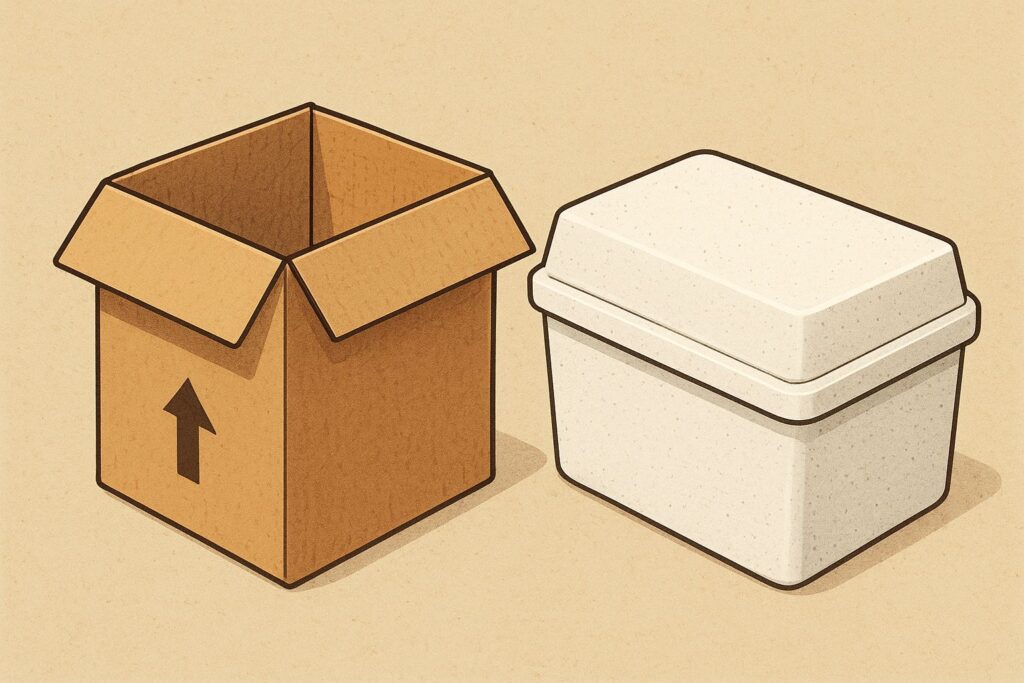
Cardboard Boxes: Lightweight and Cost-EfficientCardboard boxes are often used because they are lightweight, easy to handle, and cost-effective. Exporters prefer them for shorter routes or destinations where climate conditions are not extreme. Cardboard is also environmentally friendlier compared to styrofoam, which is a growing consideration for many companies. However, the downside is that cardboard alone provides limited insulation and protection from temperature fluctuations.
Styrofoam Boxes: Strong Insulation and ProtectionStyrofoam is widely recognized for its excellent thermal insulation. Since koi fish are sensitive to temperature changes, styrofoam helps maintain a stable water temperature throughout the journey. It also provides stronger physical protection against rough handling. For long-distance shipments—such as from Asia, Africa—styrofoam is often necessary to ensure the survival of the koi. The drawback is that styrofoam is bulkier, less eco-friendly, and sometimes more expensive to ship.
Combination of Cardboard and Styrofoam: The European StandardFor koi shipments to Europe, many exporters choose a combination of both materials. Typically, the koi are packed in plastic bags with oxygen, placed inside a styrofoam box for insulation, and then covered with a cardboard outer box for extra strength and easier labeling. This dual-layer method provides the best balance of safety, durability, and compliance with European import standards. It ensures that the koi remain in good condition even after long flights and multiple handling stages at airports.
Conclusion The choice between cardboard, styrofoam, or both depends on the destination, climate, and regulations. For European shipments, where travel times are long and temperature stability is crucial, using both styrofoam and cardboard has become the most reliable method. By selecting the right packaging, exporters can guarantee that koi arrive healthy and ready for their new homes abroad.